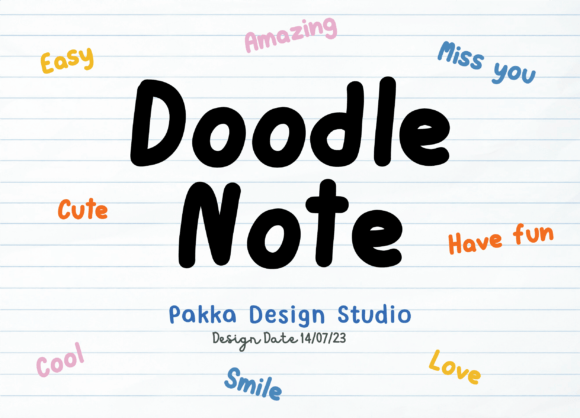
The Playful Charm of Comic Note: A Font for Creative Makers
My workbench is scattered with kraft paper tags, a jar of honey glows amber in the afternoon light, and my laptop is open to my design software. I’m sketching out a new label for my spring honey collection. I’ve tried a few professional-looking fonts, but they feel too rigid. I want something that speaks of the handmade, the sunny meadow, the gentle work of the bees. Then I open my fonts folder and see Comic Note. With a single click, the words "Sun Meadow Honey" appear on my screen, and the entire mood of the project shifts. Suddenly, the label feels alive. It’s not just text; it’s a welcome, a smile, a story told in spontaneous strokes.
A Font with a Handmade Heart
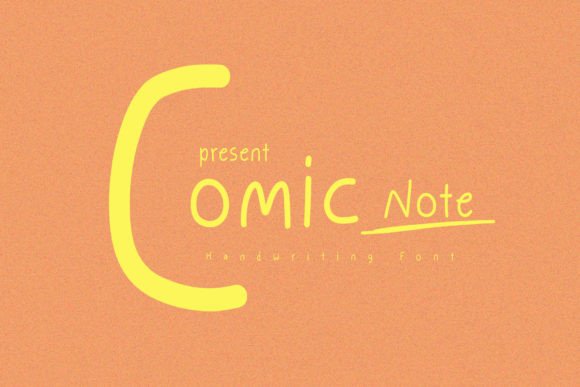
Comic Note isn’t your typical formal script font. It’s a typeface born from the joy of natural handwriting. Its charm lies in its imperfections—the free-flowing, slightly irregular strokes that mimic the way you might write a quick, happy note to a friend. There’s a delightful playfulness to it, a warmth that feels instantly approachable. For makers like us, that personality is invaluable. It translates the care we put into our physical products directly into the typography on our labels, cards, and packaging. It communicates "handmade" before a customer even reads the product description.
When I use Comic Note, I see its personality shine in specific ways. The lowercase letters have a lovely, bouncing baseline that adds rhythm. The capitals aren’t overly ornate, but they have a friendly, open shape. This makes Comic Note exceptionally versatile for the kinds of projects we create. It’s expressive enough to be a design focal point, yet clear enough to be read easily on a product tag or a wedding welcome sign.
Bringing Products to Life with Playful Typography
That spring honey label was just the start. Since discovering Comic Note, I’ve woven it into nearly every corner of my creative business.
- Candle Labels & Product Tags: The font’s natural charm is perfect for conveying the essence of a handmade candle—"Cozy Cabin," "Fresh Rain," "Lemon Verbena." It feels organic and authentic on a simple kraft circle label.
- Greeting Cards & Invitations: For birthday cards or casual party invites, Comic Note brings an immediate sense of celebration. Writing "Let’s Party!" or "You’re Invited" with this font injects pure joy into the design.
- Wedding Stationery: While not a formal wedding script, Comic Note is ideal for rustic, boho, or relaxed wedding designs. I’ve used it beautifully on welcome signs, casual seating charts, and favor tags where the vibe is warm and personal.
- Printable Wall Art & Planner Pages: In digital downloads for home or office, phrases like "Today is a Good Day" or monthly planner headers feel more motivational and less corporate when set in Comic Note.
- Stickers & Decals: Whether for a kid’s activity sheet or decorative shop stickers, the font’s clear, playful forms work wonderfully, even at smaller sizes for cutting machines like Cricut or Silhouette.
- Packaging & Branding Touchpoints: On tote bags, mugs, or as a small logo element on my shop’s paper bags, Comic Note adds a consistent, friendly touch that customers begin to recognize and associate with my brand’s handmade quality.
The effect is profound. Using a font with this much character elevates the perceived quality of a product. It tells the customer that every detail, down to the lettering, was considered with care. It creates an emotional appeal—a connection through warmth and whimsy—that a sterile, default font simply cannot achieve.
Practical Advice for Using Comic Note in Your Projects
As with any design asset, practical considerations ensure your final product looks its best.
Readability and Application
Comic Note is a display font. Its strength is in short phrases, names, titles, and decorative wording. It’s perfect for product names on labels, headlines on cards, and motivational phrases on wall art. For longer body text, like full product descriptions on a card or instructions, I always pair it with a clean, simple sans serif font. This pairing gives the design balance: Comic Note provides the personality and focal point, while the sans serif ensures clarity and easy reading of the details.
For physical applications, test your sizes. On a small sticker or a detailed SVG for a cutting machine, ensure your text isn’t too condensed—give the playful letters room to breathe. On printed cards and mockups, preview your design at actual size to confirm the charm translates clearly from screen to paper.
Licensing and Technical Details
Before selling any physical product, printable template, or merchandise using Comic Note, always check your font license. Most fonts for creatives come with a commercial license, but verifying this is a crucial step. Also, explore the font’s included features. Does Comic Note have alternates or ligatures that can add even more uniqueness to a special word? Knowing the supported file formats (like OTF or TTF) ensures compatibility with your design software and cutting machine applications. A quick check for multilingual support can also be important if your market is broad.
Typography is a foundational design asset. Choosing a font like Comic Note isn’t just about making words visible; it’s about choosing the voice for your brand and your products. It’s the whisper of "handmade" on a candle, the shout of "fun" on a birthday card, and the warm welcome on a shop’s packaging. It turns ordinary text into a key part of your creative story.
Back at my workbench, the honey labels are printed. The words "Sun Meadow Honey" in Comic Note curl across the top of the jar, looking as if they were penned there just moments ago. That’s the magic. It doesn’t look designed; it looks created. And for makers, sellers, and creatives, that’s the ultimate goal—to make every part of our work feel as real and heartfelt as the process itself.